Delicately ethereal - Young Hearts
Ioana Satmari • 4/7/2025A minimalist film burdened with more weight than it can bear, another proof that art sometimes fights, whether in hiding or in plain sight, against the limitations and perceptions of society. But through the delicacy and respect with which it approaches subjects that neither revolutions, nor free speech, nor layers of persistence have made digestible, what else can art reveal through subtlety where force has failed?
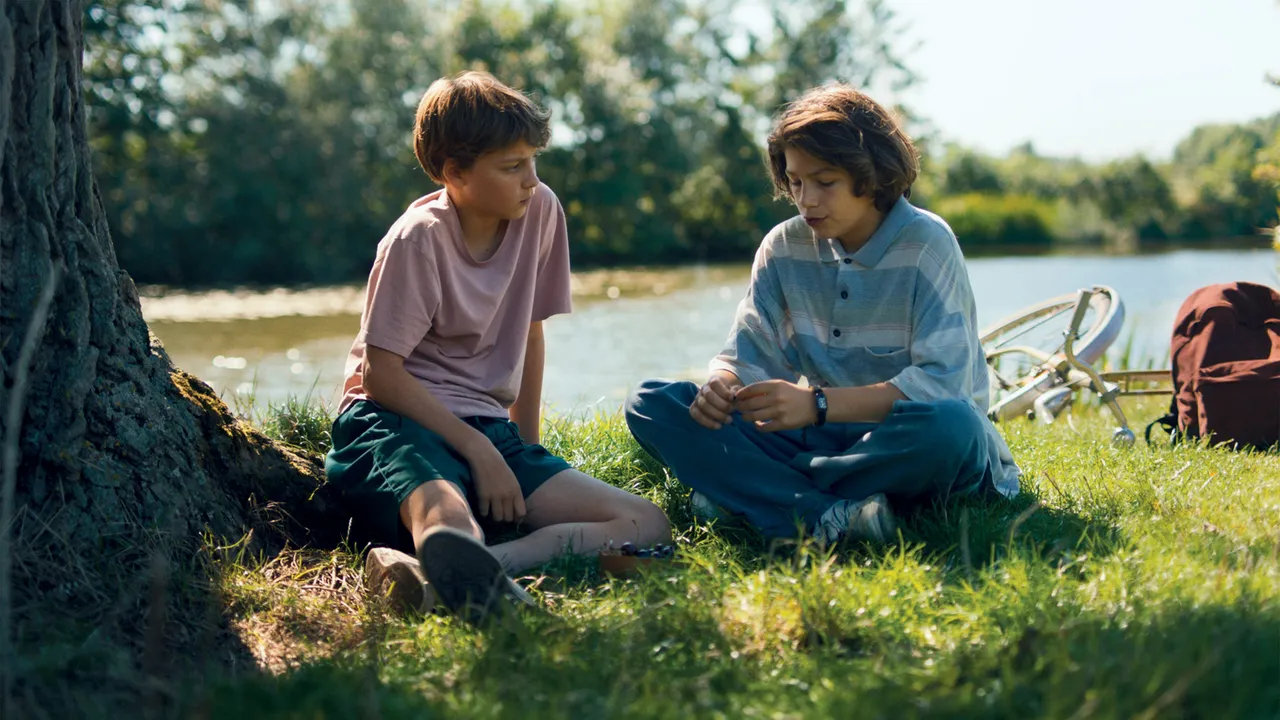
In an era where independent cinema oscillates between affected simplicity and prefabricated opulence, Young Hearts, the debut of Anthony Schatteman, makes a fragile promise, suspended between naturalness and schematism. The film follows Elias (Lou Goossens), a 14-year-old boy who falls for his new neighbor, Alexander (Marius De Saeger), of the same age. A soft coming-of-age film that aspires to emotional authenticity, yet along the way, betrays its own intentions through a smooth-edged narrative. The sincerity of the protagonists relies on an emotional truth, but the film hesitates to dig deeper.
It seems to yearn for an honest introspection of adolescence, the discovery of sexuality, and the inner turmoil of something that feels “wrong”, yet it loses itself in its own delicacy, trapped in an overly fragile aesthetic. It embraces minimalism, but instead of amplifying its message, it dilutes it. Minimalism is a double-edged sword, sometimes it compresses reality to its essence, other times it drains it of substance. Young Hearts remains caught in between, wavering between capturing emotional authenticity and fearing to say anything too forceful. It leans on a frail sensitivity and a gentle realism. Everything is so restrained, so delicate, that the film seems afraid to press too hard on any idea. The emotions are present, but they do not wound, do not disturb, do not create real conflict.
Natural lighting and discreet framing attempt to suggest unfiltered intimacy, a fresh and uncontrived atmosphere. But here lies the trap: Young Hearts too easily assumes an innocence that, instead of unsettling with emotional lucidity, ends up floating in the rarefied air of a comfortable realism. The camera observes, but rarely truly understands; emotion is invoked, not organically revealed.
The biggest issue, however, remains the (non)existence of the characters beyond their imposed narrative function. Everything is explained, verbalized, transforming adolescence and its chaotic contradictions into subtitled emotions. As a result, the film is neither truthful nor poetic but confessional, exposing the very lack of conflict that society often yearns for.
Cinema, as an art form, can fight for what the crowd cannot obtain. It can show what the world cannot describe. It can be an alternative, a reflection, a possibility. But it is not a solution. Placing on film the world you wish to feel around you will not change anything. Art can reveal, suggest, urg,—but on its own, it cannot transform reality.
If art can unveil what force cannot impose, then Young Hearts remains trapped at the level of mere suggestion.