Did Zaha Hadid and Wes Anderson work together?! - Out of Season
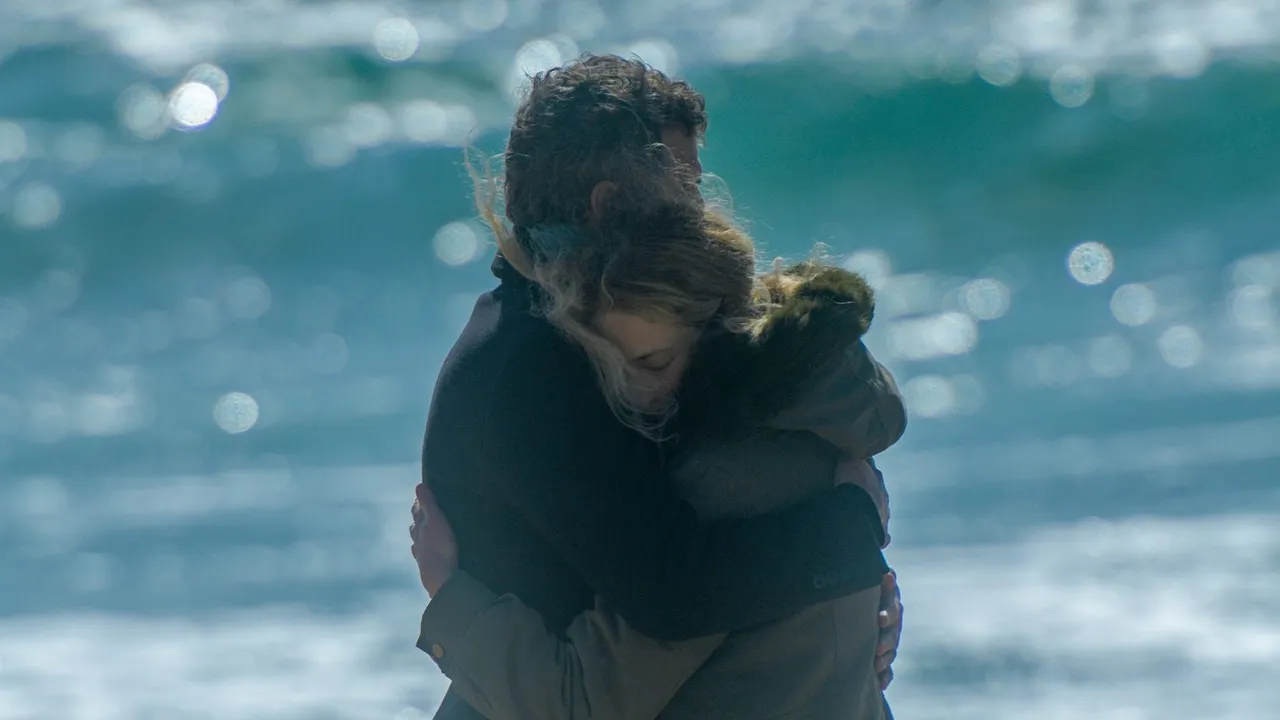
Ioana Satmari • 10/7/2024The feature film Hors-saison (directed by Stéphane Brizé) had an opening that immediately brought to my mind the architect Zaha Hadid, with its balanced asymmetry, and director Wes Anderson, with its absurd, sandy, yet cold atmosphere. Oh, and the hiccups. Hiccups?!
Yes, hiccups, because there were so many times when I was waiting for something to happen, but nothing changed, and even more often I thought how fitting it would have been if it had just stopped there, but it kept going. It’s a film with check-in and check-out. We enter a pivotal moment that we experience, and then, the character gives us the impression that something within him has been healed forever. Now, he and his life will never be the same as before. And we were there to witness this change live
I’ve seen the three moments of “emotional synchronization” with characters recur in recent French films. Prolonged scenes in a forced dance that aims to be emotional, with pretensions of synchronizing with a musical line.
I sensed a desperation in this film to dive into as many internalizable subjects as possible (differences in status, social classes, life models, age, ways of living an all-good life). You’d think that the main character, Mathieu (Guillaume Canet), who openly states that he’s lonely both inside and out, is the only one in the film who is lonely. But Alice (Alba Rohrwacher), whom he meets by chance, an ex-girlfriend from whom he split 15 years ago with little to no explanation, is just as lonely, even though their lives are opposites. He, a well-established actor, professionally fulfilled, retreats to a resort far from the world, seemingly. She, who chose to live with her husband and son, in a small town, teaches piano lessons. The plot twist (unexpected for a romantic film): the resort is right in the small town.
The first bizarre moment of sync between you and the story is after they start spending more and more time together. Alice starts asking questions about who they were, what happened back then, and what’s happening now. She goes home and gets overwhelmed by the past story, by the current story, all set to a slightly jazzy, slightly drawling tune, something she plays on the piano.
Besides class and social status, the film also introduces the age difference. Alice, working in a nursing home, meets Lucette (Lucette Beudin), who tells us her life story. Another difference, that of ideals, comes out. The old woman, in her youth, didn’t aspire to love but to a marriage full of sacrifices, to support the children and give them a better life. After her husband’s death and the children leaving, at 60, she falls in love with Gilberte (Gilberte Bellus) at the nursing home. She is inspired by the story of the two women. Now she is happy. She hopes. She gains courage. Cliché, she remembers her own thoughts. She listens to them. We see her making the decision to do what brings her joy. This is the second moment of emotional overlap between us and Alice.
The story of the two elderly women in love intersects in apparent opposition with what is rekindling between the two former lovers. You’re prompted to feel this in the third moment with slow, golden, slightly blurred images. At the wedding of the two elderly women, Alice and Mathieu take (give?) a moment to distance themselves from any reality, from those differences, from the past.
I’ll leave things hanging here just as I wish the film had ended.