Not as beautiful as it pretended to be - Forest of Bliss
Ioana Satmari • 11/3/2024Dang! Dang! Dang! The dead donkey’s head dangles and falls down the steps to the water. Dang! Dang! Dang! The brutal sensation of the image hits you, endorsed by all the nausea the film induces. Forest of Bliss, directed by Robert Gardner, is no blessing, it doesn’t bring pleasure or make you feel comfortable in your own skin. It almost punches you away, forcing you to gulp down your discomfort. It’s like a medicine you can either take correctly or not. It depends on how much you take, how often, if you take it on an empty stomach, drink alcohol, eat cocoa or mint, read the leaflet, or have allergies to its ingredients. Depending on all this, the documentary either has an effect or causes side effects.
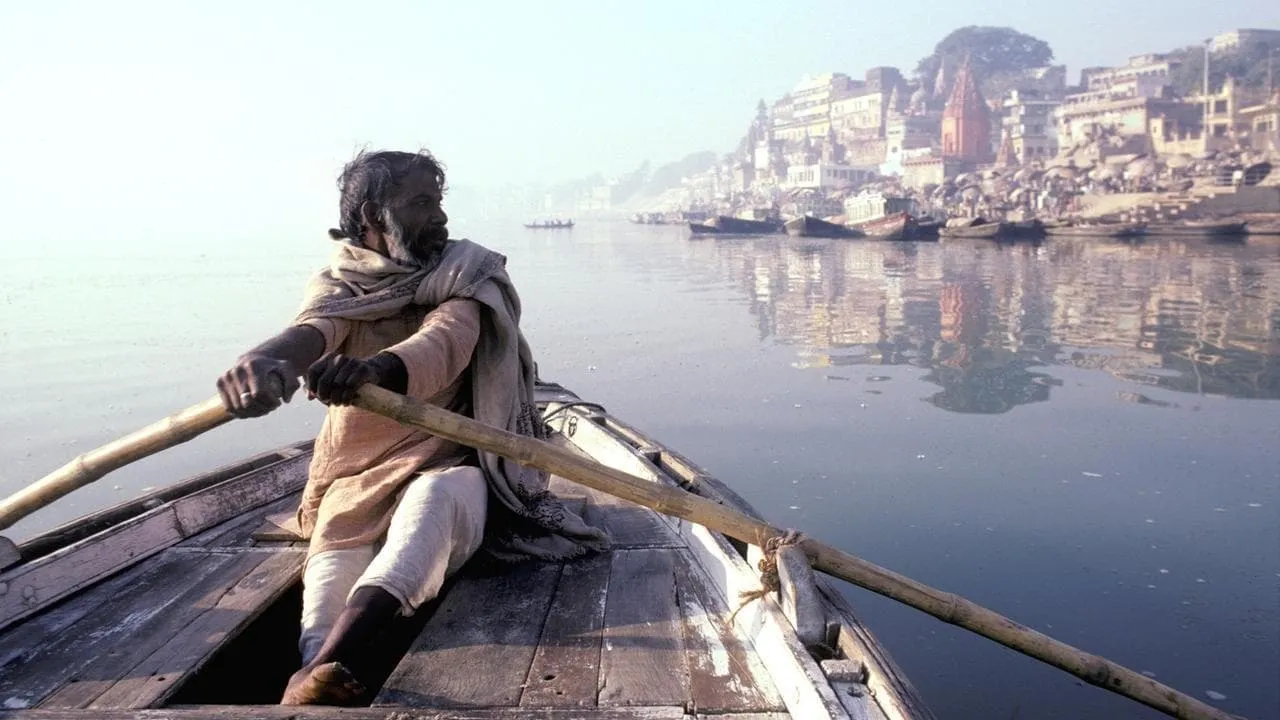
Forest of Bliss begins and maintains a feeling of nausea from all the grunting and wheezing sounds made by the person we follow. It leaves you perplexed by what you see. It doesn’t tell you if it’s about religion, tradition, death, love, community, or simply the pov of someone in India. The entire documentary has no subtitles, designed so you are “immersed”, actually lost, in a world you don’t understand. Being, again, an anthropological documentary, it self-categorizes as one of those films that could have ended at 20 minutes without upsetting anyone. Repetitive, weighty, and incomprehensible, it feels too distant. If you don’t know the atmosphere in which it takes place, you feel entirely estranged. You’re part of a conversation where neither the gestures nor the words are familiar to you. It’s a constant search for and clinging to Western understanding in contrast to a completely different world. We follow something throughout the film, something I personally couldn’t find. The man, our guide, leads us from the Ganges to the temple, to the market, and through houses, all while you’re supposed to contemplate the world through a lens of cultural deconstruction. To aspire not to understand things anymore but simply to accept them in their own form. And what is that form? Maybe, over time, at some point, those things will reveal their meaning “of their own accord,” as if meaning has consciousness, or as if it subconsciously activates in us to suddenly allow understanding.
I tried to relate the documentary to the idea of deconstruction I mentioned earlier, with which we’re all bombed. The deconstruction of the image to be understood solely in isolation. That is, the image as a phenomenon should not hold meaning just through sight. This documentary seems to want to express that better is the enemy of good. Forest of Bliss leaves you only with images. So, you come to see that just the image alone no longer gives meaning to the image. You’re left with nothing. What we see only makes sense, in fact, within a context. The context is a contrast. The contrast between the things we know and those we discover. Thus, the image is formed only through contrast. And perhaps the way we see films itself is based on the contrast we form in our own minds.
Back to the documentary. You’re left with shocking images because that’s as much as many of us can understand. The only contrast you see is the cultural one between our world and the one you see there. Even if the first reaction is one of outrage, what is this thing that no one understood, there’s something deeper. This depth emerged after a week in which I tried to bury the insufficiently contrasting images. I started from the idea that things must be related to what we understand, some sort of universal, because Europe is reference point zero, this is the correct tradition, this is where we start counting time, where it’s said what happens, where things are controlled, where the most written history is. But after all the revolt settles, it turns into a shame over your inability to resonate with a world so vast that it doesn’t belong to you. Maybe this transformation into shame also brings a touch of respect. Like when you discover something new, you can feel three things: fear, excitement, or respect. But I realized that fear is actually the foundation in every case. We’re afraid of all things new and unknown. Then fear transforms into the other two. It turns into excitement if you assimilate the new and can incorporate it into your own culture. You can familiarize it. And respect is when maybe you understand the new, but you put it somewhere on the mental shelf because there’s nothing you can do with it. It’s unfamilizable.
Forest of Bliss came as an unfamilizable fear. It’s a documentary with too much contrast with our world, and you feel like you can’t see its layers. You expect bliss, but something grotesque comes in, where you can’t find your place. You don’t understand what it’s trying to say, and you want to believe it’s because of your own ignorance and inability. Maybe it’s good to universalize and familiarize films to feel them, or maybe that’s not the correct way to approach understanding.