AI-generated script: the hero and the princess - Eternal
Ioana Satmari • 3/10/2025The obsession with the unknown, the desire to decode the future, all wrapped in a glossy, kitschy blue world. With its aesthetic visuals and fluid narrative pillar, Eternal, directed by Ulmaa Salim, is the kind of film that looks in the mirror and whispers to itself, “I’m spectacular.” But behind its futuristic blue décor and polished image, it feels overly ambitious.
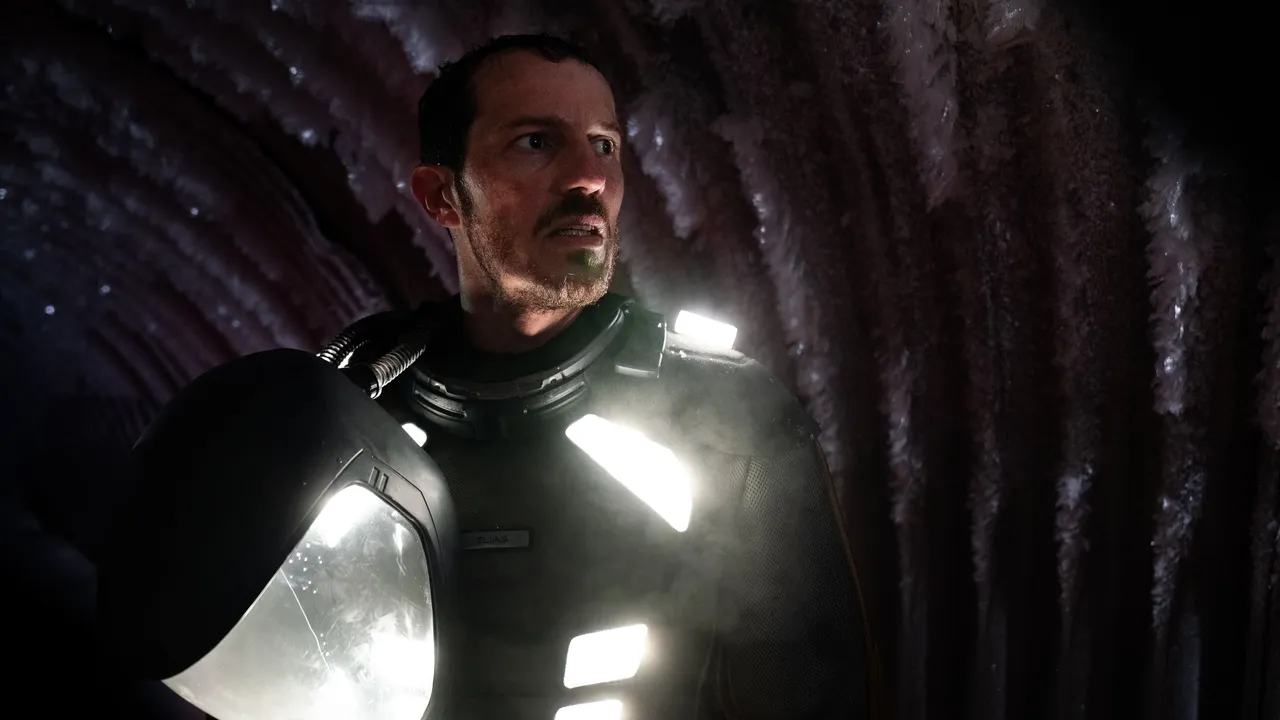
The film aims to transport us to an unseen future where Elias (Simon Sears), the generic science-obsessed hero, and Anita (Nanna Øland Fabricius), the ethereal princess, haunt the frames. This attempt to build a future distinct from the present feels artificial. The relationship between Elias and Anita serves as a narrative thread built largely on suspense, but it fails to establish credibility. Their love, lacking emotional depth, seems like a thin string the film pulls awkwardly to tie everything else together.
It’s fascinating how society has always been drawn to crafting versions of the future: cold lighting, metallic surfaces, and generalized despair, inevitably accompanied by a lackluster love story. Eternal tries to align itself with a “new future” aesthetic, but there’s a slight issue: every projection of the future merely reflects what we already know. Thus, it remains a reformulated and polished version—blue and futuristic—more a stylistic exercise than an authentic exploration.
Oh, and let’s not forget the film’s profound message: “If society doesn’t do anything about it, we’re all doomed”.
Instead of delving into the philosophical or moral implications of a world where the future can be predicted and manipulated, Eternal falls into the trap of superficiality. It aims to be an innovative cinematic piece but is held back by a lack of narrative depth and an overly technical approach to the genre. The story is vague, and the dramatic beats lack imagination and genuine intrigue.
Eternal struggles between the desire to visually impress with its ultra-polished version of the present reformulated as the future, and ultimately becomes a film made for posters, not for memories.