Who we (might) become - Alice On & Off
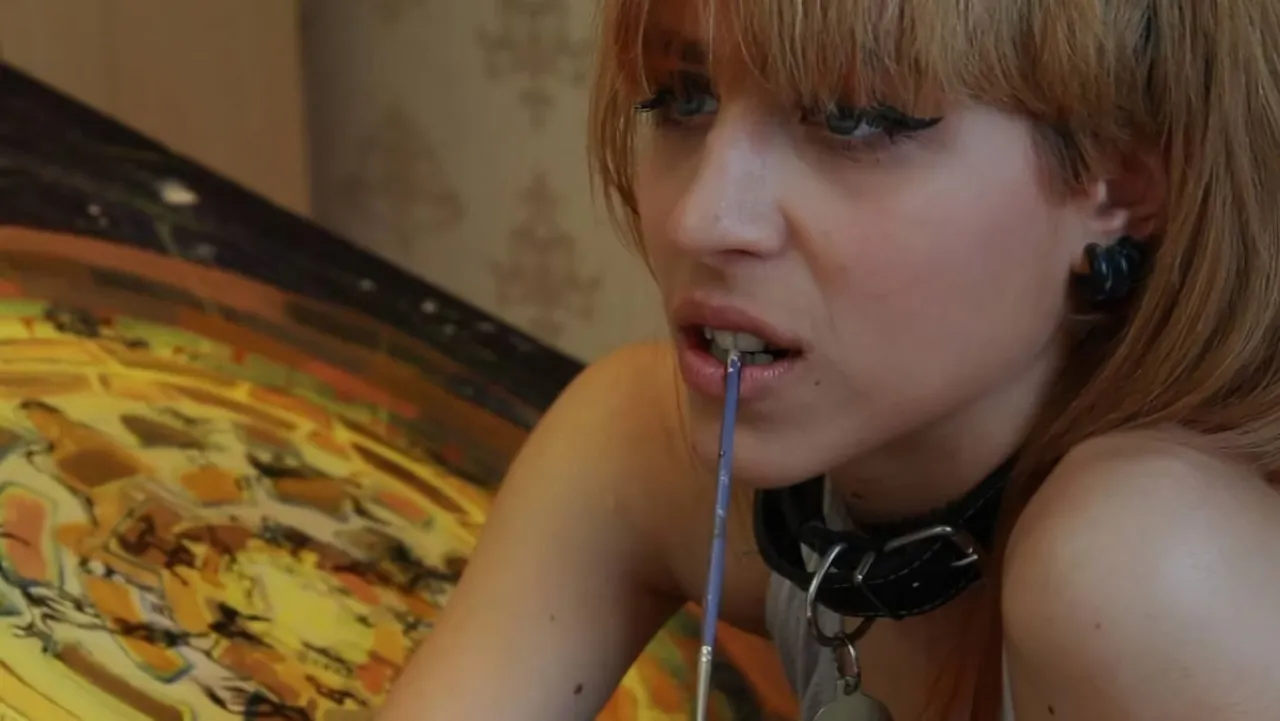
Ioana Satmari • 10/16/2024A syrupy voice guides you through the film, a voice that contrasts with all the bitterness it presents. Small and unobtrusive, the documentary Alice On & Off, directed by Sandra Isabela Țenț, scrutinizes childhood through Alice’s piercing gaze as a reference point for who we will become.
Although the documentary touches on many taboo topics, I felt it was about children. About children themselves and the inner child within each of us. The film speaks extensively about trauma, a constant struggle, quiet but persistent, to draw attention to things we often overlook. It tells us about sincerity, about how mistakes are not neutral for those around us but are consequences of events not entirely within our control.
All of Alice’s appearances are so different: she changes her look frequently over the years, in a continuous search for self. If no one offered you direction or guided you when you were young, isn’t it harder now to know which way to go?
The film serves up contrast after contrast and things to marvel at, often taboo, presented in a de-tabooed manner. Alice is a teen mom. She lives through art and live webcam work. The child’s father, Dumitru, is 35 years older than her. The child lives with only one parent, a decision Alice made. She tells us it’s better for her child to live with the father than with only the mother, as she herself experienced. Alice is a former addict. At one point, she relapses. She leaves to work abroad, sends money home, returns to the country, then disappears.
The child loves his mother very much.
One of the most profound scenes may be with Aristo, Alice and Dumitru’s son. He was 6 and alone in his room. He shows us a mannequin head with red lips and blonde hair. He tells us that’s his mom. And he loves his mom very much.
The same sadness you see in his eyes is present throughout Alice’s being when she talks about childhood, even though she doesn’t tell us much about her past. Constructed in an expositional style, which usually avoids subjectivity, Alice makes everything very personal. The way her lip trembles with emotion, the way she clasps her hands, and her eyes sometimes glisten with held-back tears. No one hid anything here. And yet, it feels like no one tried to dig too deeply. Things flowed naturally.
I would have liked to look more into Alice’s eyes. At the end, there is a collage where she says nothing, and the narrator’s voice explains something I interpreted more as an encouragement, not as a personal reference to Alice’s story. I would have liked to gaze quietly into Alice’s eyes and think about what happened. Who is this person, really? Who am I to know so much about her? Do I truly know anything about her?
Alice On & Off, directed by Sandra Isabela Țenț, is a weighty documentary worth taking some time afterward to reflect on. To think about what you have in common with Alice. To consider that maybe your mistakes aren’t solely yours and that the mistakes of others aren’t just theirs. We are not alone in a world with neatly defined emotional boundaries. Things are fluid, and we are all susceptible to influence.